Purple yam
- Botanical: usually referred to as Dioscorea alata
- Color: naturally deep purple
- Taste: softly sweet, creamy, lightly vanilla-like
- Use: ube lattes, desserts, cakes, ice cream, spreads
Searching for ube vs taro, taro vs ube, or wondering whether ube is the same as taro? In short: ube is purple yam and taro is a different root. They can look similar in desserts and drinks, but they differ clearly in taste, color, texture, and use.
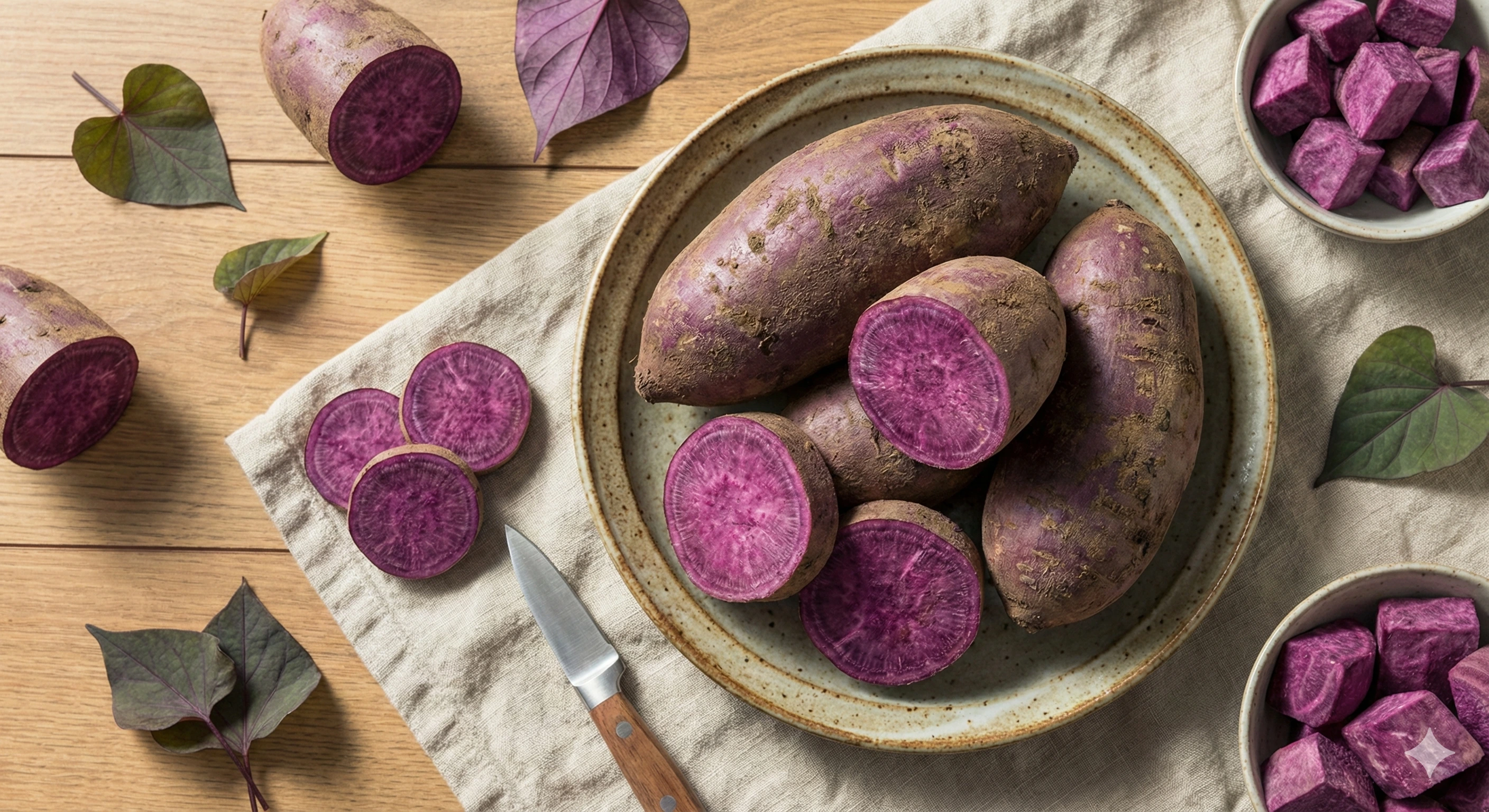
The difference between ube and taro is that ube is a purple yam with a soft, creamy, lightly vanilla-like taste, while taro is a different root with a nuttier, earthier, and starchier profile. When people search for taro vs ube, this is usually what they mean. Ube is naturally more intensely purple. Taro is usually white to pale purple with speckles and is often additionally colored in commercial drinks.
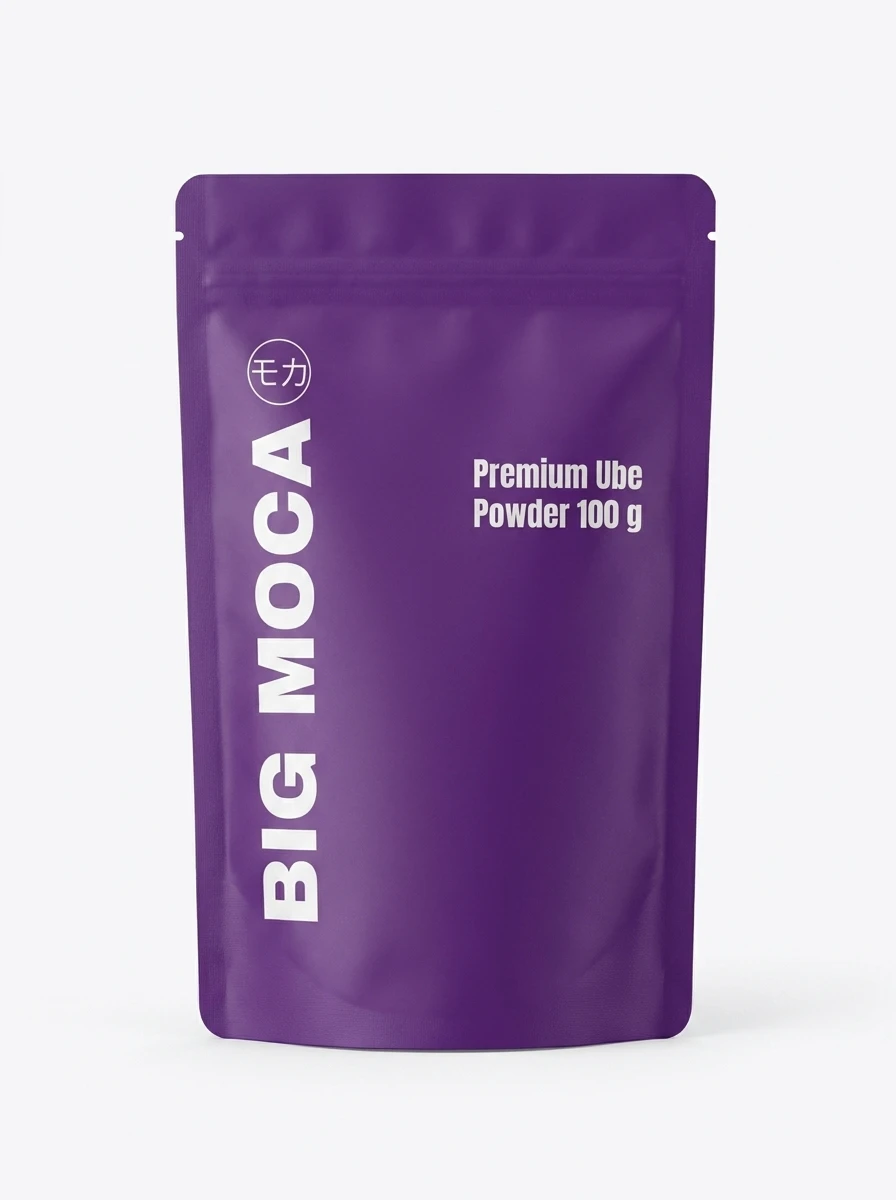
Our ube powder is 100% purple yam, dried and ground, with nothing added. A 100 g pouch makes about 15 lattes. We pack and ship it from The Hague.
€17.99 per 100 g
| Ube | Taro | |
|---|---|---|
| Plant | Purple yam (Dioscorea alata) | Root corm (Colocasia esculenta) |
| Color | Naturally deep purple | White to pale lilac with speckles |
| Taste | Sweet, creamy, vanilla-like | Earthier, nuttier, less sweet |
| Texture | Full and velvety | Starchier and drier |
| Use | Ube lattes, desserts, baking | Milk tea, savory dishes |
Ube: intensely purple and visually striking, even without artificial colorants.
Taro: usually white, beige, or light lilac with speckles; less vivid on its own.
Ube: creamy, softly sweet, and often described as vanilla-like or lightly nutty.
Taro: earthier, drier, nuttier, and less sweet.
Ube: adds a fuller, velvety body to desserts and lattes.
Taro: is often starchier and more neutral on the palate.
Ube: popular in lattes, cheesecakes, pastries, and specialty drinks.
Taro: often used in bubble tea, Asian dishes, and sweetened powder mixes.
The confusion mostly happens because both ingredients appear in Asian cuisine and both sometimes show up in purple drinks or desserts. Online, terms like purple yam, taro, and purple sweet potato are also frequently mixed together.
On top of that, many taro bubble tea powders are extra sweetened and colored. That can make taro look more purple in practice than pure taro really is.
For a specialty latte, most people prefer ube. The flavor is rounder, creamier, and more dessert-like, so it works especially well with milk and plant-based alternatives.
If you are aiming for a cafe-style purple latte with natural color and a softer flavor, you will usually be closer to ube powder than taro. Curious about the exact notes? Read what does ube taste like for the full ube flavor profile.
Building a menu or sourcing for a food business? See our ube powder supplier page for Europe for hospitality, bakery, and manufacturing use cases.
No. This query comes up often, but ube is not the same as taro. Ube is purple yam, while taro is a different root vegetable with a different flavor profile and natural color.
When someone searches for taro vs ube, they usually want to know which one is sweeter, more purple, or better suited to desserts and drinks.
For a creamy latte, many people choose ube because the flavor is softer and more dessert-like and the color can be naturally deeper purple.
For bubble tea, you more often see taro, especially in powder mixes. People searching for ube vs taro latte or ube vs taro bubble tea are therefore usually comparing not just taste, but also use case.
Want to do more than just read about the difference between ube and taro? Try our 100g premium ube powder.