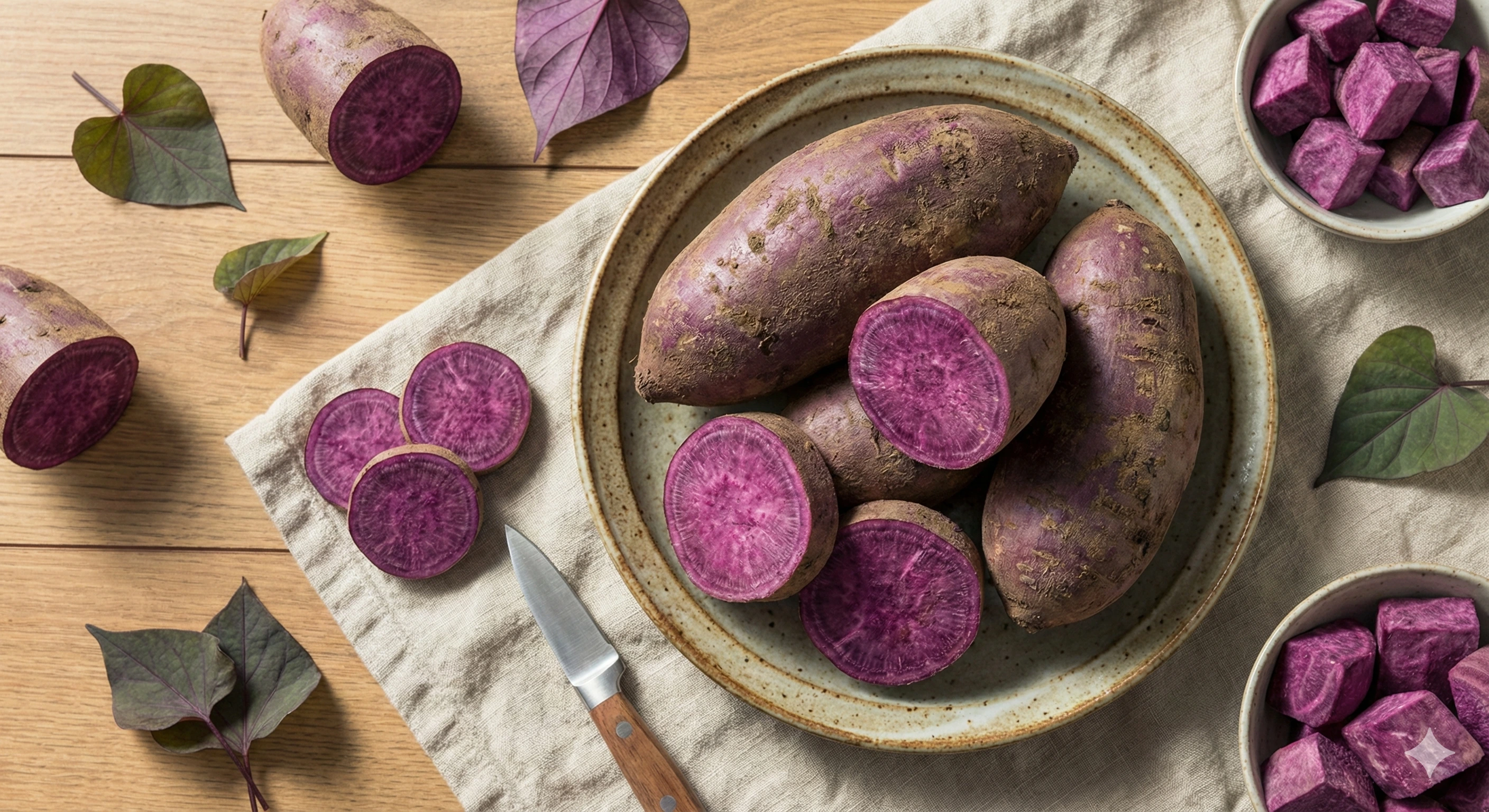
The Filipino origin
Ube is a tuberous yam native to Southeast Asia. While several purple-yam varieties grow across the tropics, nowhere is ube as deeply woven into culinary identity as in the Philippines.
For generations, ube has been cultivated and used in traditional desserts. The best-known example is Ube Halaya: cooked and mashed ube slowly reduced with coconut milk, condensed milk, and butter into a thick, rich jam. That jam forms the base for many other classics such as Halo-Halo and ube cakes.
Ube vs. taro vs. sweet potato
There is often confusion: is ube the same as taro? No. If you want a quick side-by-side comparison, also read what is the difference between ube and taro.
- Ube (Purple Yam): Dark brown, rough skin. Intensely purple inside. Tastes softly sweet, earthy, and lightly vanilla-coconut like.
- Taro: Lighter, hairy skin. White or grey flesh with purple flecks. Tastes nuttier and less sweet, more like potato before sugar is added.
- Purple Sweet Potato (Okinawan): Smoother skin. Drier and starchier in flavor than ube.
The taste of purple
What makes ube so distinctive is not just the striking color, which is naturally created by powerful antioxidants called anthocyanins, but also the flavor. Ube is often described as a cross between white chocolate, vanilla, and pistachio. It is creamy and soft without becoming overpoweringly sweet. For the complete breakdown, read what does ube taste like.
That balance makes it work beautifully in sweet applications like ice cream, waffles, and lattes, while still leaving room for more savory experiments.
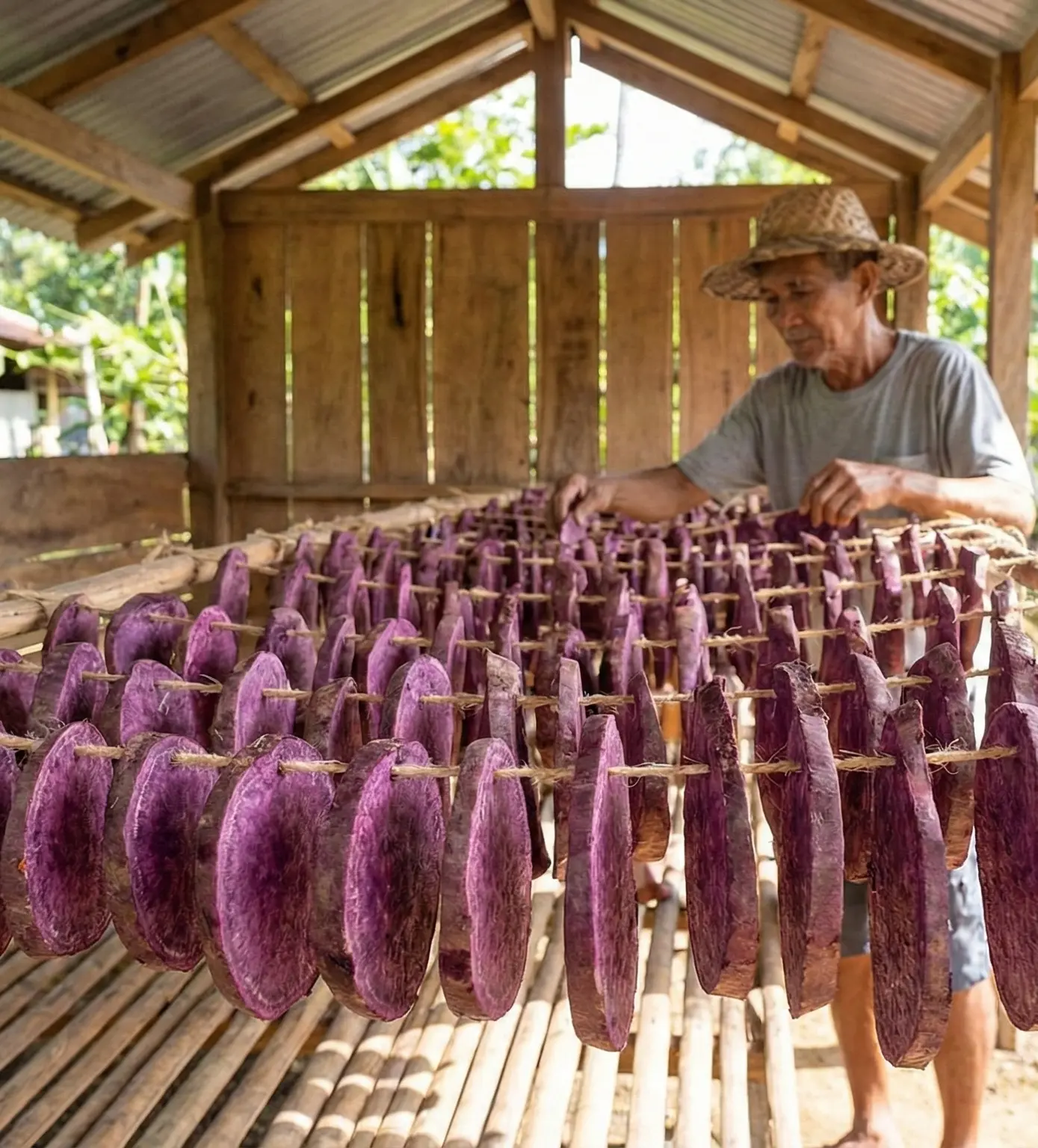
From Manila to the modern cafe
In recent years, ube has grown from a Filipino staple into a global phenomenon. Social media certainly helped showcase its visual appeal, but the lasting popularity comes from the flavor. Ube is not just a color; it is a full taste profile that now sits alongside matcha and chai on menus from New York to Amsterdam.
Want to try ube yourself? Visit buy ube powder or grab the recipe for an ube latte.
FAQ: History of ube
Where does ube come from?
Is ube the same as taro?
How does ube taste?
At Big Moca, we honor that history by making ube accessible without compromise. Our ube comes straight from the source, is dried into pure powder, and keeps its natural color and flavor. No artificial colorants, just Dioscorea alata in its purest form.